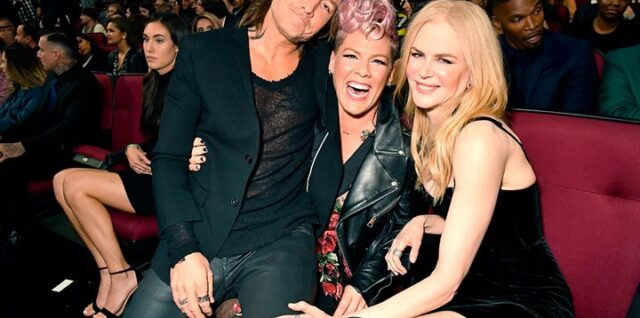
Although born in New Zealand and raised in nearby Australia, Keith Urban made his biggest splash in Nashville, where he helped rewrite the rules of contemporary county songs. By embracing drum loops and elements of Top 40 pop, Urban wrote music that appealed to a wide audience, effectively satisfying his Nashville fans without alienating those more accustomed to pop songs. He also became a genuine celebrity, known for his good looks, marriage to Nicole Kidman, and outspoken battle with alcoholism. Even so, it was the music that maintained Urban’s career, from his work with the Ranch at a time of the late ’90s to the acclaimed solo units that followed.
Keith Urban began learning guitar as a six year-old. His father, the owner of a local convenience store, agreed to hang a guitar teacher’s flyer in his shop window in exchange for free lessons. The lessons went to his son, who demonstrated natural talent on the instrument and won several talent competitions at a time of still in elementary school. Urban grew comfortable on-stage, and he worked on his singing and acting abilities as a member of the Westfield Super Juniors, a local theater company. Meanwhile, he took a cue from his father (who had a deep interested in American culture and country material) by gravitating toward the work of Glen Campbell, Dolly Parton, Don Williams, and Jimmy Webb, all of whom inspired his early attempts at songwriting. Urban added his own dimension to those influences when he discovered Dire Straits and became interested in the fretwork of Mark Knopfler, which led to in-depth study of Knopfler’s tone and technique.
Australian country material was primed for a revolution at the start of the ’90s, and Keith Urban — young, brash, and blonde, with a guitar style that owed heavily to rock & roll — was part of that transformation. After signing with the Australian branch of EMI Records, he released his first album and charted multiple number one smashes in his home country. Even so, Urban’s sights remained set on Nashville, TN, which he considered to be the birthplace of the material he loved. Having made periodical pilgrimages to Nashville to forge valuable career bridges, he soon decided to base himself in the city. With his Australian bandmate, drummer Peter Clarke, he formed a three-piece band named the Ranch. Their original bass player soon returned to Australia, but West Virginian Jerry Flowers rapidly stepped in.
The Ranch’s music was raw and rowdy, more indicative of Australian pub rock than Nashville country. Even so, the ensemble eventually netted a album deal with Capitol Nashville and a management contract with Miles Copeland, who had previously managed the Police. The group’s debut album, The Ranch, was put forth to moderate acclaim in 1997, but Urban was forced to take a break when he developed throat problems, and the Ranch disbanded soon after. during Urban remained on vocal rest, other performers called upon him to add some of his fleet-fingered magic to their records. Garth Brooks asked Urban to perform on Double Live, the Dixie Chicks invited him to play on their second record (which featured a reworked version of “Some Days You Gotta Dance,” a song that had previously appeared on the Ranch’s debut), and Matt Rollings — one of Nashville’s top producers — hired Urban as a session player for his latest record. The two immediately clicked.
Impressed with Rollings’ knowledge of Nashville’s session players, Urban asked him to produce his next solo album. gave us in 1999, the self-titled Keith Urban spawned four hit singles and helped paved the way for his successful solo career in America. A tour in support of that record saw Keith Urban opening for such major acts as Dwight Yoakam, Faith Hill, and Tim McGraw, as well as as the main billing act on his own shows. Urban found increased success with 2002’s Golden Road, which sent three singles to the top of the country charts and went triple platinum in the U.S., as well as 2004’s Be Here, which bested the feats of its predecessor by selling over four million units. Keith Urban was now a contemporary country superstar, replete with Grammy nominations and paparazzi attention, and his label capitalized on that attention by reissuing the Ranch’s debut album later that year. An anthology of Urban’s work, Days Go By, came in 2005.
The next year, Urban continued to attract media focus with his highly publicized engagement (and June marriage) to fellow Australian Nicole Kidman, plus his voluntary entry into a rehabilitation center for alcohol addiction. He temporarily postponed all his upcoming promotional appearances, although the record Love, Pain & the Whole Crazy Thing was put forth that November as scheduled. It failed to produce a number one hit (the first of Urban’s solo units to do so), but Love, Pain & the Whole Crazy Thing nevertheless went double platinum in America, aided in part by a popular tour with Carrie Underwood. Urban returned to the top of the charts in 2008 with a re-recorded version of “You Look Good in My Shirt,” which had originally appeared on 2002’s Golden Road. The new version appeared on his latest compilation record, Greatest Hits: 18 Kids, and its success helped pave the way for Urban’s next solo album. put forth in 2009, Defying Gravity found the artist ruminating on life with Nicole Kidman while chart-topping tracks like “Sweet Thing” and “Kiss a Girl.”